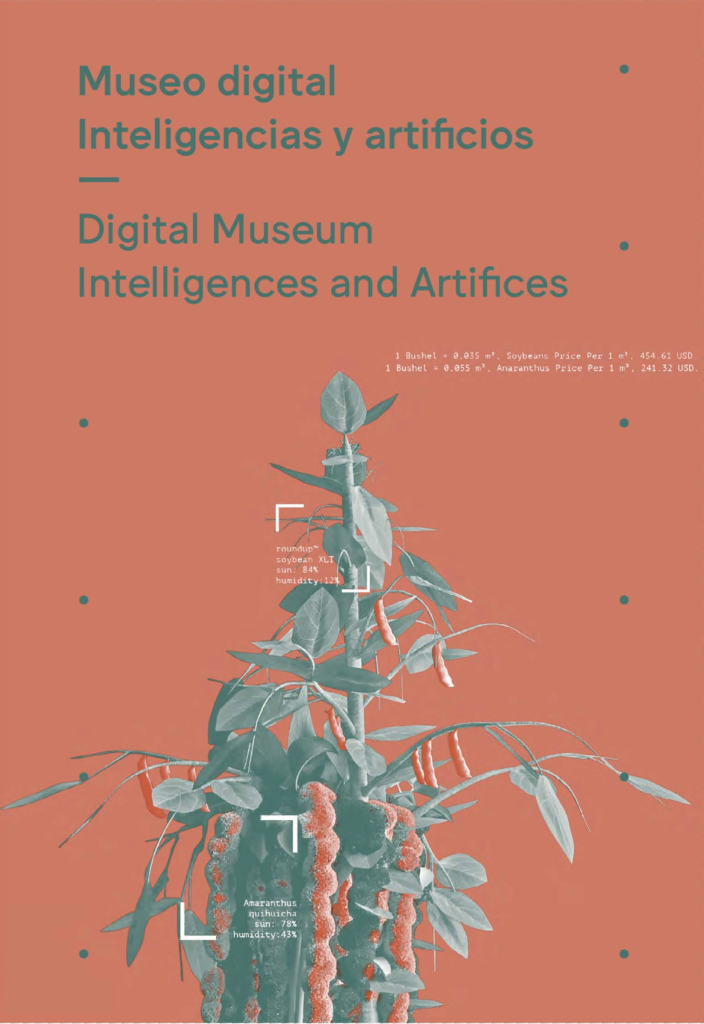
Digital Museum. Intelligences and Artifices

This bilingual edition explores the role of museums in the digital age, with a special focus on exploring and discussing digital practices and global perspectives; it also recognizes the rich history of art and technology in the region. The publication is structured in two main sections: «Future Technologies: Memory, Languages and Knowledges”, discussing indigenous knowledge systems and their relationship with new technologies; and, «The Museum as Laboratory: Technology, Data and New Artistic Practices”, exploring how museums can function as laboratories for knowledge and experimentation.   Both topics aim at discussing not only the impact of digitalisation and technology in museums, but mostly, how the museum should be reconfigured for the 21st century challenges. 

Museo Digital: inteligencias y artificios / Digital Museum. Intelligences and Artifices is published by Museo Universitario Arte Contemporáneo (MUAC) of the National Autonomous University of Mexico (UNAM) with the support of Telefónica Movistar Foundation México.  

Book edited by José-Carlos Mariátegui (Peru/UK).
Contributors include: Sara Diamond (Canada), Ulises Mejías (Mexico/USA), Roberto Zariquiey (Peru), Priscilla Molina Muñoz (Costa Rica), Fernanda Pita (Brazil), Yásnaya Elena Gil (Mexico), Bruno Moreschi (Brazil), Bernardo Fontes (Brazil), Luz María Bedoya (Peru), Juan Cortés (Colombia), and Luis Martínez-Uribe (Spain).   

Available on open access in Spanish and English 

This book emerged from the third edition of the International Digital Museum Conference, which I curated and brought together artists, researchers, and cultural managers to reimagine museums in the digital era.


Mariátegui, José-Carlos, ed. 2025. Digital Museum. Intelligences and Artifices. Edited by José-Carlos Mariátegui. Mexico: Museo Universitario Arte Contemporáneo – MUAC, Universidad Nacional Autónoma de México – UNAM.
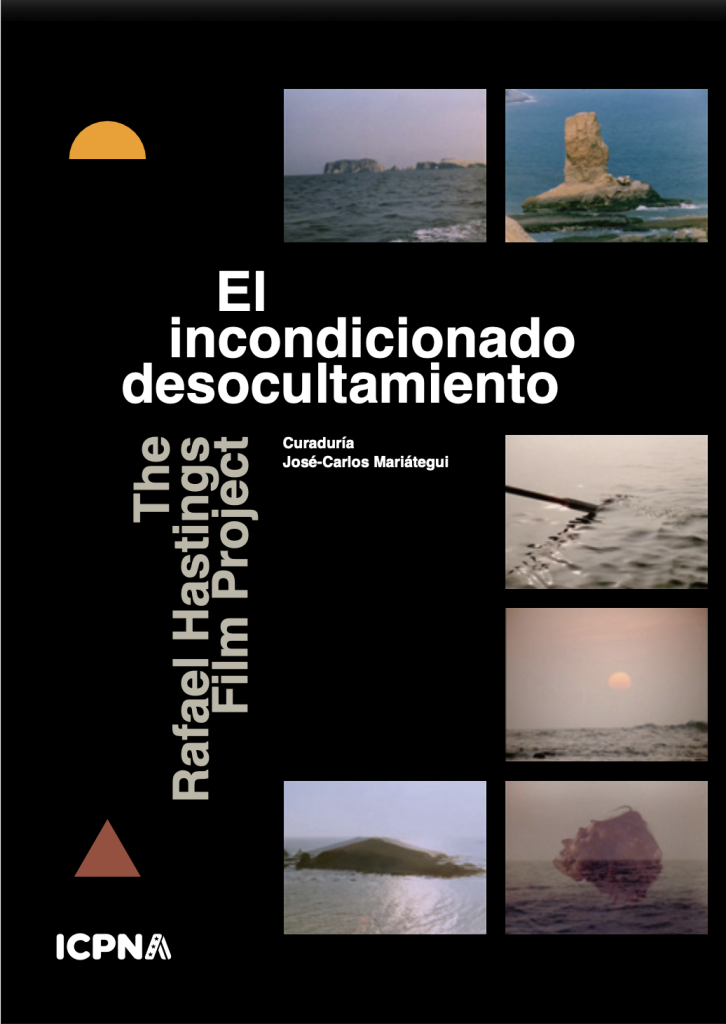
The Rafael Hastings Film Project

Rafael Hastings (1942–2020) was one of the most unclassifiable figures in Latin American experimental film and video art. Born in Lima, he studied in Brussels into the orbit of Jean-Luc Godard, Maurice Béjart, and the experimental ferment of 1960s Europe — absorbing cinema, choreography, conceptual art, and countercultural politics before returning to Peru in the early 1970s with an ambition that defied any single medium.

This book revisits a dimension of his practice that has remained almost entirely invisible until now: his work in film and video. At its centre is El incondicionado desocultamiento (1974), a 35mm experimental film believed lost for nearly five decades and recently recovered from the archive of the Filmoteca Española in Madrid. Shot across weeks of travel along the Peruvian coast — through the desert of Paracas and the ancient ceremonial complex of Sechín — the film weaves together pre-Columbian archaeology, Oriental mysticism, and speculative fiction into four short films that meditate on disappearance, transcendence, and the deep time of culture.

Alongside the restored film, and a catalogue raisonné, this book publishes for the first time the complete Diario de filmación — Hastings’ handwritten production notebook and its transcriptions, filled with watercolours, technical calculations, collaged magazine clippings, and poetic instructions to himself — a document that reveals how he worked and thought as a filmmaker. The book includes original contributions by José-Carlos Mariátegui, Fietta Jarque, Natalia Rey de Castro, Jorge La Ferla and Luis Alvarado.


Mariátegui, José-Carlos, ed. 2025. El Incondicionado Desocultamiento.  The Rafael Hastings Film Project. Edited by Instituto Cultural Peruano Norteamericano ICPNA. Lima: ICPNA, Instituto Cultural Peruano Norteamericano.

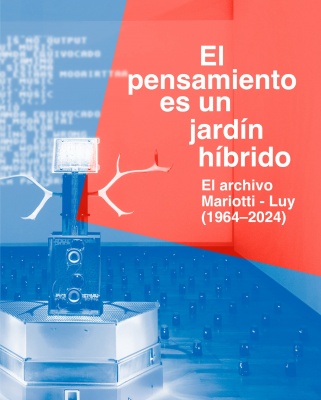
Thinking is a Hybrid Garden: the Mariotti – Luy Archive (1964-2024)

Thinking is a Hybrid Garden: the Mariotti – Luy Archive (1964-2024) showcases six decades of artistic and cultural work by Francesco Mariotti (Bern, Switzerland, 1943) and María Luy (Puerto Maldonado, Peru, 1950), revealing a pioneering body of work that intertwines technology, collectivity, nature, and social commitment. Spread across the galleries of the Museo de Arte de Lima – MALI and the Museo de Arte Contemporáneo de Lima – MAC Lima, this exhibition provides a comprehensive overview on the Mariotti – Luy Archive, currently on loan to MALI. This archive contains historical documentation (photographs, newspaper clippings, magazines, posters, films, and other materials) spanning from the 1960s to the present, covering key moments in both local and international cultural production. Alongside these documents, numerous artworks trace the trajectory of both artists between Peru and Europe.

The exhibition takes as its point of departure the concept of the hybrid, a central theme in the artistic and cultural production of both artists. For Mariotti, the hybrid is not merely  a mixture of elements, but rather a complex form of existence that integrates seemingly opposing components, such as technology and nature. The concept derives from his installations known as Hybrid Gardens (or Quantum Gardens), in which distinct elements converge. For the artist, the hybrid is linked to plastic, waste, and consumer culture, as well as to magic, poetry, and art. It is both artificial and natural, and both organic and synthetic. In other words, it embodies a practice of resistance and transformation.

At a time when artificial intelligence (AI) poses new challenges regarding the relationship between humanity, technology, and nature, this exhibition offers a close look at several pioneering developments in this field. We present works that have never before been  exhibited in Peru, offering  multisensory and luminous experiences. These early projects foreshadow the evolution of artificial intelligences emerging in dialogue with diverse cultural traditions and worldviews, from Dadaism to Amazonian mythologies. The exhibition also highlights cultural management work that has been the driving force behind the prolific creative production of Francesco Mariotti and María Luy.

Co-Curated with Miguel A. López