El pensamiento es un jardín hibrido. El archivo Mariotti – Luy (1964-2024)

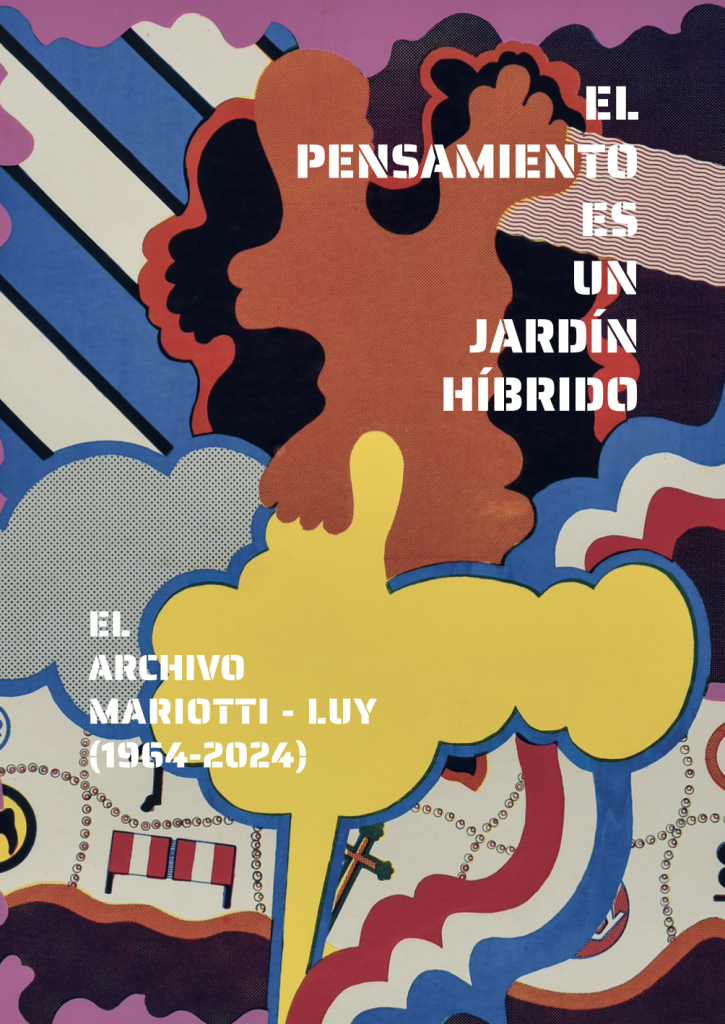
Co-edited with Miguel A. López in the framework of the exhibition of the same name, presented simultaneously at the Museo de Arte de Lima – MALI and the Museo de Arte Contemporáneo de Lima MAC-Lima, this book is the first publication devoted entirely to the work of Francesco Mariotti and María Luy: six decades of artistic and cultural production traversing continents, languages, and disciplines.

One central challenge for this publication was one of scale. The Mariotti–Luy Archive, held on long-term loan at MALI since 2017, comprises more than fifteen linear meters of documentation —photographs, correspondence, sketches, posters, films, programmes, computational poems, manifestos— alongside an extensive body of works across widely varied media. Rather than attempting an exhaustive catalogue, we opted for a structure that functions as an invitation to explore this pluriverse: an extended curatorial essay, the product of more than a decade of joint research; a portfolio of works that also includes ephemeral projects documentation of significant historical value; a series of original essays —by Mijail Mitrovic, Almendra Otta, Giuliana Vidarte, Emilia Curatola, Rosalyn Chávarry, and a foundational text by Gustavo Buntinx three decades ago on the work of Mariotti—; a section of appendices gathering key documents, manifestos, and interviews; and a detailed chronology.

The recent passing of Francesco Mariotti during the editorial process transformed the character of the book, which became also a tribute. This publication only begins to reveal the richness of a practice that will continue to generate new readings and new wonder in the years to come.

Digital Museum. Intelligences and Artifices

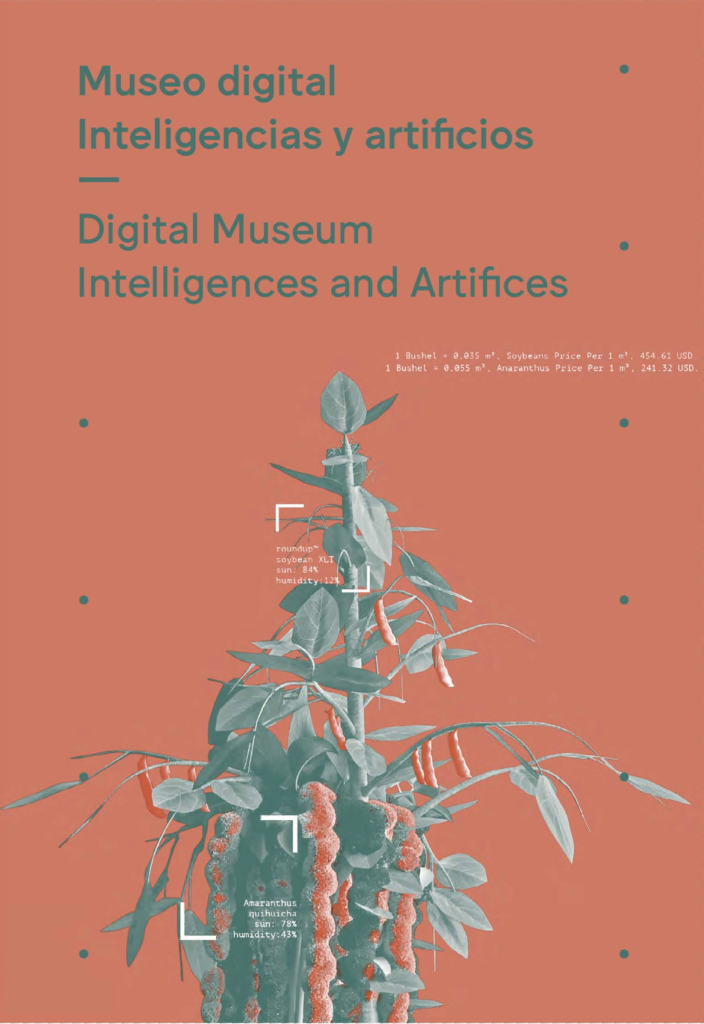
This bilingual edition explores the role of museums in the digital age, with a special focus on exploring and discussing digital practices and global perspectives; it also recognizes the rich history of art and technology in the region. The publication is structured in two main sections: «Future Technologies: Memory, Languages and Knowledges”, discussing indigenous knowledge systems and their relationship with new technologies; and, «The Museum as Laboratory: Technology, Data and New Artistic Practices”, exploring how museums can function as laboratories for knowledge and experimentation.   Both topics aim at discussing not only the impact of digitalisation and technology in museums, but mostly, how the museum should be reconfigured for the 21st century challenges. 

Museo Digital: inteligencias y artificios / Digital Museum. Intelligences and Artifices is published by Museo Universitario Arte Contemporáneo (MUAC) of the National Autonomous University of Mexico (UNAM) with the support of Telefónica Movistar Foundation México.  

Book edited by José-Carlos Mariátegui (Peru/UK).
Contributors include: Sara Diamond (Canada), Ulises Mejías (Mexico/USA), Roberto Zariquiey (Peru), Priscilla Molina Muñoz (Costa Rica), Fernanda Pita (Brazil), Yásnaya Elena Gil (Mexico), Bruno Moreschi (Brazil), Bernardo Fontes (Brazil), Luz María Bedoya (Peru), Juan Cortés (Colombia), and Luis Martínez-Uribe (Spain).   

Available on open access in Spanish and English 

This book emerged from the third edition of the International Digital Museum Conference, which I curated and brought together artists, researchers, and cultural managers to reimagine museums in the digital era.


Mariátegui, José-Carlos, ed. 2025. Digital Museum. Intelligences and Artifices. Edited by José-Carlos Mariátegui. Mexico: Museo Universitario Arte Contemporáneo – MUAC, Universidad Nacional Autónoma de México – UNAM.

The Rafael Hastings Film Project

Rafael Hastings (1942–2020) was one of the most unclassifiable figures in Latin American experimental film and video art. Born in Lima, he studied in Brussels into the orbit of Jean-Luc Godard, Maurice Béjart, and the experimental ferment of 1960s Europe — absorbing cinema, choreography, conceptual art, and countercultural politics before returning to Peru in the early 1970s with an ambition that defied any single medium.

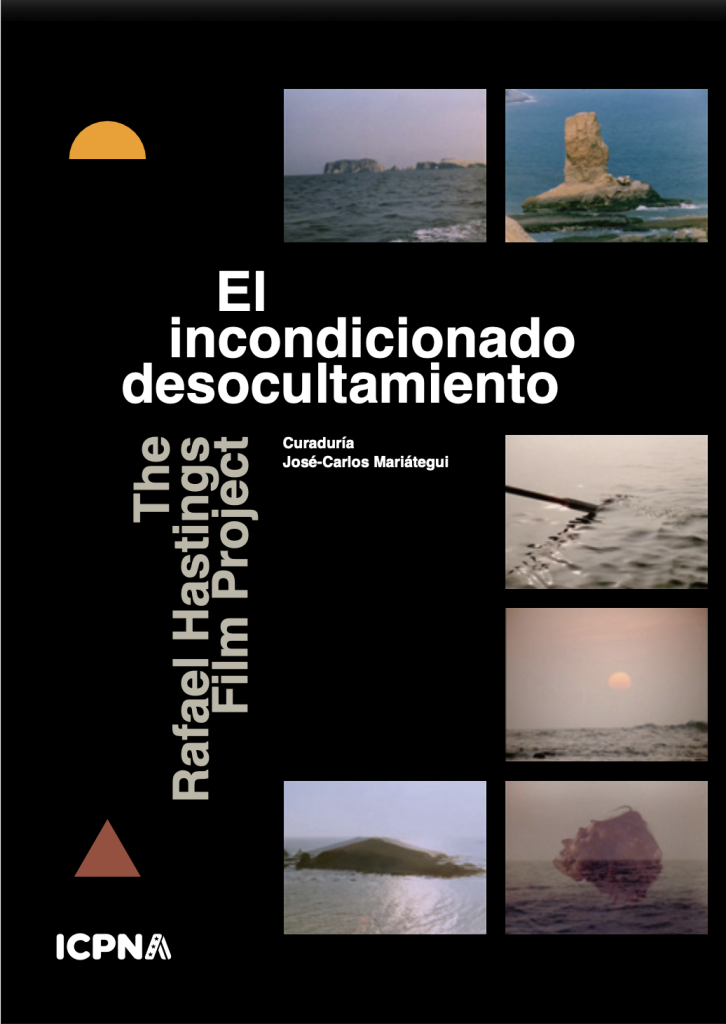
This book revisits a dimension of his practice that has remained almost entirely invisible until now: his work in film and video. At its centre is El incondicionado desocultamiento (1974), a 35mm experimental film believed lost for nearly five decades and recently recovered from the archive of the Filmoteca Española in Madrid. Shot across weeks of travel along the Peruvian coast — through the desert of Paracas and the ancient ceremonial complex of Sechín — the film weaves together pre-Columbian archaeology, Oriental mysticism, and speculative fiction into four short films that meditate on disappearance, transcendence, and the deep time of culture.

Alongside the restored film, and a catalogue raisonné, this book publishes for the first time the complete Diario de filmación — Hastings’ handwritten production notebook and its transcriptions, filled with watercolours, technical calculations, collaged magazine clippings, and poetic instructions to himself — a document that reveals how he worked and thought as a filmmaker. The book includes original contributions by José-Carlos Mariátegui, Fietta Jarque, Natalia Rey de Castro, Jorge La Ferla and Luis Alvarado.


Mariátegui, José-Carlos, ed. 2025. El Incondicionado Desocultamiento.  The Rafael Hastings Film Project. Edited by Instituto Cultural Peruano Norteamericano ICPNA. Lima: ICPNA, Instituto Cultural Peruano Norteamericano.