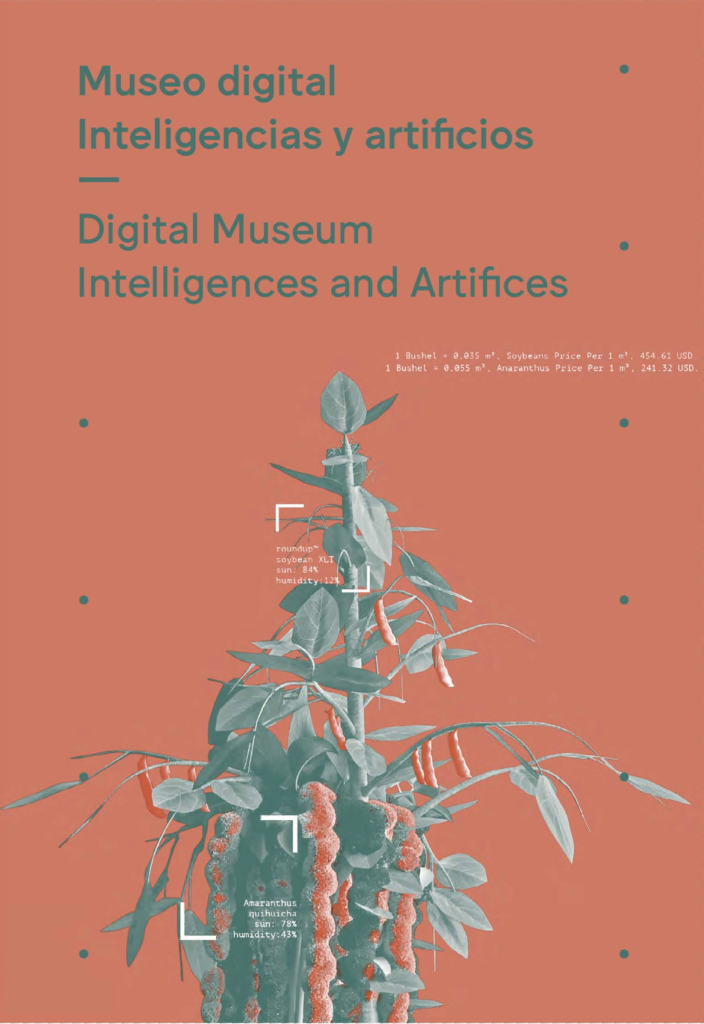
This bilingual edition explores the role of museums in the digital age, with a special focus on exploring and discussing digital practices and global perspectives; it also recognizes the rich history of art and technology in the region. The publication is structured in two main sections: «Future Technologies: Memory, Languages and Knowledges”, discussing indigenous knowledge systems and their relationship with new technologies; and, «The Museum as Laboratory: Technology, Data and New Artistic Practices”, exploring how museums can function as laboratories for knowledge and experimentation. Both topics aim at discussing not only the impact of digitalisation and technology in museums, but mostly, how the museum should be reconfigured for the 21st century challenges.
Museo Digital: inteligencias y artificios / Digital Museum. Intelligences and Artifices is published by Museo Universitario Arte Contemporáneo (MUAC) of the National Autonomous University of Mexico (UNAM) with the support of Telefónica Movistar Foundation México.
Book edited by José-Carlos Mariátegui (Peru/UK).
Contributors include: Sara Diamond (Canada), Ulises Mejías (Mexico/USA), Roberto Zariquiey (Peru), Priscilla Molina Muñoz (Costa Rica), Fernanda Pita (Brazil), Yásnaya Elena Gil (Mexico), Bruno Moreschi (Brazil), Bernardo Fontes (Brazil), Luz María Bedoya (Peru), Juan Cortés (Colombia), and Luis Martínez-Uribe (Spain).
Available on open access in Spanish and English
This book emerged from the third edition of the International Digital Museum Conference, which I curated and brought together artists, researchers, and cultural managers to reimagine museums in the digital era.
Mariátegui, José-Carlos, ed. 2025. Digital Museum. Intelligences and Artifices. Edited by José-Carlos Mariátegui. Mexico: Museo Universitario Arte Contemporáneo – MUAC, Universidad Nacional Autónoma de México – UNAM.