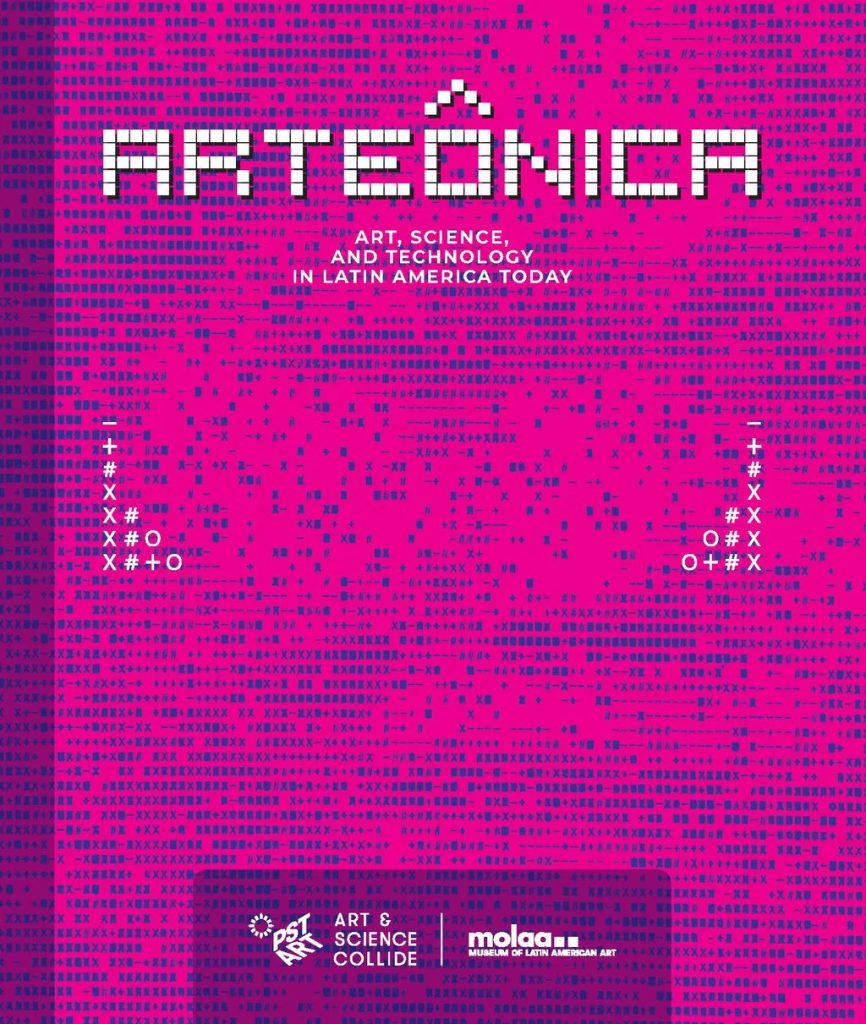
ARTEÔNICA: Art, Science, and Technology in Latin American Today, Exhibition Catalog

WINNER of the 2026 ALAA-Thoma Foundation Exhibition Catalogue Award! Learn more about the award HERE

*****

MOLAA´s Exhibition Catalog book / Hardcover

Edited by Gabriela Urtiaga (MOLAA´s Chief Curator) with contributions by José-Carlos Mariátegui, Rodrigo Alonso, Claudia Giannetti, Patrick Frank, Tania Aedo Arankowsky, and David Maulén de los Reyes.

Product description

ARTEONICA is a Museum of Latin America´s catalog exhibition dedicated to explore the links between art, science and technology in Latin America from the 1960s to the present. This book, published in conjunction with a major exhibition at MOLAA, presents a comprehensive study about this little-known Latin American art movement, creating a dialogue between a group of “pioneers” artists from the 1960s and 1970s and the contemporary artists whose work responds to their legacy.

Artists from Argentina, Brazil, Chile, Mexico and Peru: Marcela Armas, Dora Bartilotti, Martha Boto, Teresa Burga, Tania Candiani, Rejane Cantoni, Analivia Cordeiro, Waldemar Cordeiro, Vitória Cribb, Patricia Domínguez, Juan Downey, Gyula Kosice, Francesco Mariotti, Marta Minujín, Lucía Monge, Leo Nuñez, Constanza Piña, Juan Salas Carreño, Mariano Sardón and Pola Weiss.

An outstanding group of writers offer diverse essays addressing key threads about the intersection of art, science and technology, enriching the historical legacy with compelling contemporary debates on participation, social engagement, Indigenous knowledge, living and autonomous systems, memory, and networks for global solidarity, leading to uncommon terrains giving rise to critical and dialogical perspectives.


Product details
Publisher ‏ : ‎ The Museum of Latin American Art (MOLAA) 
Language ‏ : ‎ English-Spanish
Hardcover ‏ : ‎ 248 pages fully illustrated 
ISBN : ‎ 978-0-9801080-7-1
Dimensions ‏ : ‎ 9 x 1.1 x 10.5 inches
Publication date: November 20th, 2024

ARTEÔNICA Art, Science, and Technology in Latin America Today

ARTEÔNICA is an exhibition project that explores the little-known Latin American art movement based on the relationship between art, science and technology, from the 1960s up to the present.

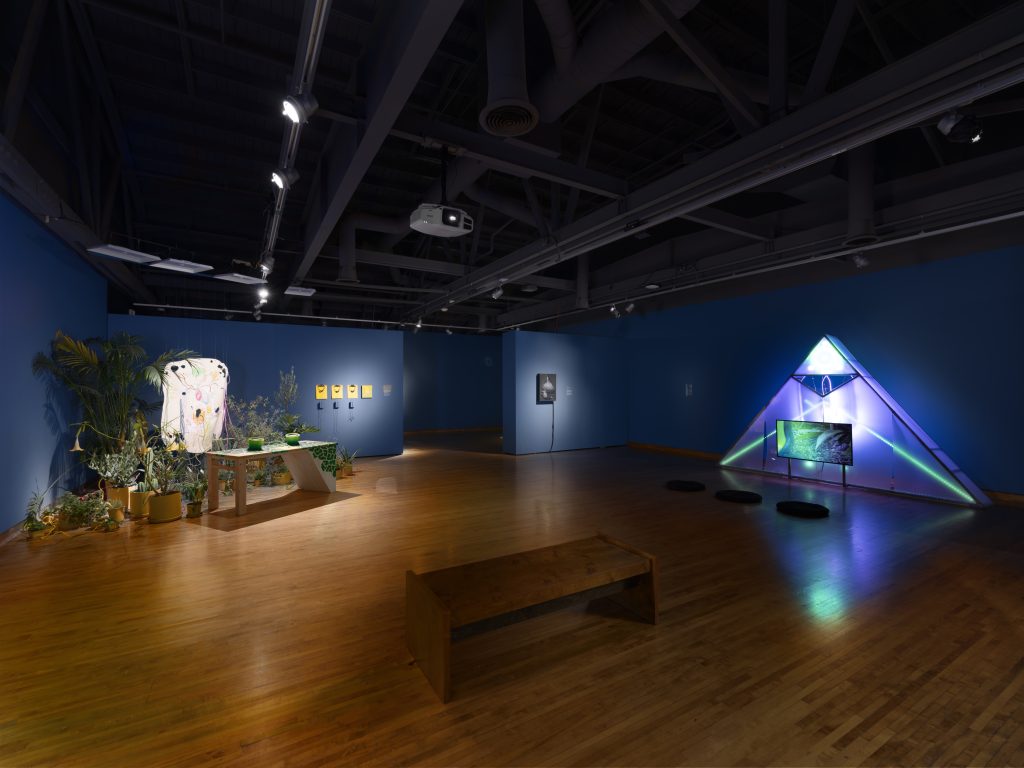
Arteônica: Art, Science and Technology in Latin America Today takes as its starting point the unparalleled contribution of Brazilian electronic art pioneer Waldemar Cordeiro (Italy, 1925 – Brazil, 1973)— one of the first computer artists in South America — to explore and analyze the state of electronic and cybernetic arts in the last 60 years. Cordeiro’s treatise on arteônica—a verbal synthesis of electronic art and the original title of the exhibition he held in Brazil in 1971—features the computer as an instrument for positive social change capable of democratizing art and culture.

In that sense, Arteônica explores this little-known Latin American art movement, creating a dialogue between a group of «pioneers» from the 1960s and 1970s and the contemporary artists whose work responds to their legacy.

In spite of Latin America’s challenging political and social conflicts of the 1960s and 1970s — coups d’état, civil – military dictatorships, economic crises — the relationship between art, science and technology expanded during that periodboth in aesthetic theories and in artistic productions.

Latin American artists and thinkers never stopped working at the intersection of art, science and technology, enriching the historical legacy with compelling contemporary debates on participation, social engagement, Indigenous knowledge, living and autonomous systems, memory, and networks for global solidarity, leading to uncommon terrains giving rise to critical and dialogical perspectives.

Artists such as Marta Minujín (Argentina), Francesco Mariotti (Peru), Juan Downey (Chile), Gyula Kosice (Argentina), Martha Boto (Argentina), Pola Weiss (Mexico), and Teresa Burga (Peru) laid the foundations for a production inspired by the most innovative concepts of their time, while submerging themselves in international and local research findings, the ideas that moved the world, and those emerging from their own regional milieux.

The 21st century sees many of those pioneering artists and numerous other Latin American artists and thinkers working at the intersection of art, science and technology: Analivia Cordeiro (computerized dance / Brazil), Marcela Armas (autonomous ecological technology / Mexico), Constanza Piña (free software and open designs / Chile), Mariano Sardón (unlearning structures from neurosciences / Argentina), Rejane Cantoni (machine linguistics / Brazil), Patricia Domínguez (art, ethnobotany, and non-human intelligence / Chile), Juan Salas Carreño (animation with the use of digital tools / Peru), Leo Nuñez (bio art, interactive objects and robotics / Argentina), Tania Candiani (intersection of sound and multimedia / Mexico), Vitória Cribb (animation and 3D / Brazil), Lucía Monge (link between humans and plants / Peru), and Dora Bartilotti (activism / Mexico).

Fully inscribed in the present, Arteônica: Art, Science and Technology in Latin America Today sets out to draw a succinct panorama of some of the most relevant contributions of science-and-technology art made by Latin American artists today, and to restore some solidity to an aesthetic and intellectual framework that may allow placing those contributions in a broader, conceptual, historical, and geopolitical intellectual setting.

From the hypothesis that links artists to their specific social and cultural contexts (this is the case for many Latin American creators who maintain a special bond with their places of origin while living in other regions), we set out to develop an exhibition environment and a conceptual framework—in the form of theoretical research—that enabled us to address what is intrinsic to the technological arts arising from Latin America.

To this end, we have brought forth two levels of progressively converging work. On one hand, a group of artists whose oeuvre lies at the intersection of art, science and technology develop a proposal in dialogue with their exchanges with scientists, engineers, technicians, and other agents, many of them central contributors to that field’s growth and experimentation. On the other hand, a group of Latin American theorists and researchers contribute a complete revision of that context through an approach that restores and amplifies the links between past and present.

The exhibition is presented as a knowledge and experimentation matrix exploring themes as a cross-section—not chronologically but in dialogue with these interrelated thematic axes where many of the artists could be part of each of the nuclei in question from different perspectives.
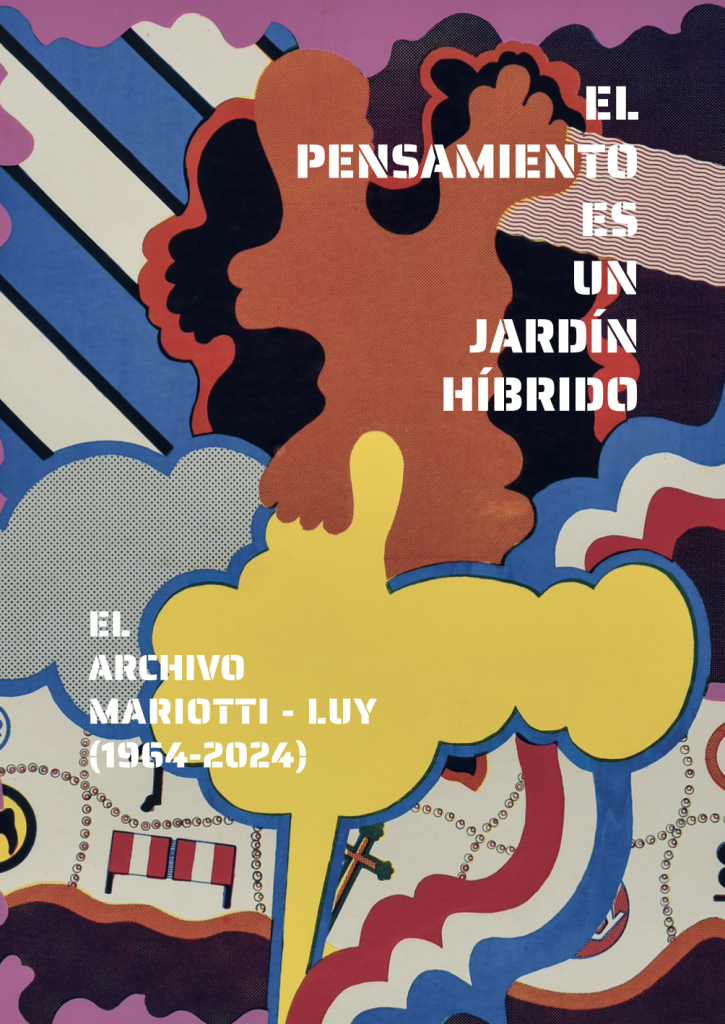
El pensamiento es un jardín hibrido. El archivo Mariotti – Luy (1964-2024)

Co-edited with Miguel A. López in the framework of the exhibition of the same name, presented simultaneously at the Museo de Arte de Lima – MALI and the Museo de Arte Contemporáneo de Lima MAC-Lima, this book is the first publication devoted entirely to the work of Francesco Mariotti and María Luy: six decades of artistic and cultural production traversing continents, languages, and disciplines.

One central challenge for this publication was one of scale. The Mariotti–Luy Archive, held on long-term loan at MALI since 2017, comprises more than fifteen linear meters of documentation —photographs, correspondence, sketches, posters, films, programmes, computational poems, manifestos— alongside an extensive body of works across widely varied media. Rather than attempting an exhaustive catalogue, we opted for a structure that functions as an invitation to explore this pluriverse: an extended curatorial essay, the product of more than a decade of joint research; a portfolio of works that also includes ephemeral projects documentation of significant historical value; a series of original essays —by Mijail Mitrovic, Almendra Otta, Giuliana Vidarte, Emilia Curatola, Rosalyn Chávarry, and a foundational text by Gustavo Buntinx three decades ago on the work of Mariotti—; a section of appendices gathering key documents, manifestos, and interviews; and a detailed chronology.

The recent passing of Francesco Mariotti during the editorial process transformed the character of the book, which became also a tribute. This publication only begins to reveal the richness of a practice that will continue to generate new readings and new wonder in the years to come.

The book can be ordered from MALI Shop

Thinking is a Hybrid Garden: the Mariotti – Luy Archive (1964-2024)

Thinking is a Hybrid Garden: the Mariotti – Luy Archive (1964-2024) showcases six decades of artistic and cultural work by Francesco Mariotti (Bern, Switzerland, 1943) and María Luy (Puerto Maldonado, Peru, 1950), revealing a pioneering body of work that intertwines technology, collectivity, nature, and social commitment. Spread across the galleries of the Museo de Arte de Lima – MALI and the Museo de Arte Contemporáneo de Lima – MAC Lima, this exhibition provides a comprehensive overview on the Mariotti – Luy Archive, currently on loan to MALI. This archive contains historical documentation (photographs, newspaper clippings, magazines, posters, films, and other materials) spanning from the 1960s to the present, covering key moments in both local and international cultural production. Alongside these documents, numerous artworks trace the trajectory of both artists between Peru and Europe.

The exhibition takes as its point of departure the concept of the hybrid, a central theme in the artistic and cultural production of both artists. For Mariotti, the hybrid is not merely  a mixture of elements, but rather a complex form of existence that integrates seemingly opposing components, such as technology and nature. The concept derives from his installations known as Hybrid Gardens (or Quantum Gardens), in which distinct elements converge. For the artist, the hybrid is linked to plastic, waste, and consumer culture, as well as to magic, poetry, and art. It is both artificial and natural, and both organic and synthetic. In other words, it embodies a practice of resistance and transformation.

At a time when artificial intelligence (AI) poses new challenges regarding the relationship between humanity, technology, and nature, this exhibition offers a close look at several pioneering developments in this field. We present works that have never before been  exhibited in Peru, offering  multisensory and luminous experiences. These early projects foreshadow the evolution of artificial intelligences emerging in dialogue with diverse cultural traditions and worldviews, from Dadaism to Amazonian mythologies. The exhibition also highlights cultural management work that has been the driving force behind the prolific creative production of Francesco Mariotti and María Luy.

Co-Curated with Miguel A. López

Electro-Poet-Rivelazionaria: Il Salvataggio delle Poesie Computazionali di Gianni Toti – Una conversazione con Francesco Mariotti