In 1985, at the Videoart Festival Locarno, two visionary artists — Italian poet and videomaker Gianni Toti and Swiss-Peruvian artist Francesco Mariotti — created one of the earliest experiments in generative digital poetry in Italy. Using Mariotti’s interactive installation Pappagallo 2, built on a Commodore 64 programmed in BASIC and inspired by the Amazonian mythological figure of the Chullachaqui, they fed Toti’s characteristically inventive, multilingual poems into a machine that randomly recombined them, printed the results on a dot-matrix printer, and even read them aloud in a synthesized voice to a bewildered audience.
What makes this experiment so resonant today is the uncanny parallel between Toti’s own creative practice — his invention of neologisms, his scrambling of linguistic conventions — and what algorithms would later do at scale: as Mariotti put it, Toti was already doing manually what the computer had only just begun to do. Decades before the debate on AI and creativity, this collaboration in a parrot-shaped sculpture asked questions we are still struggling to answer.
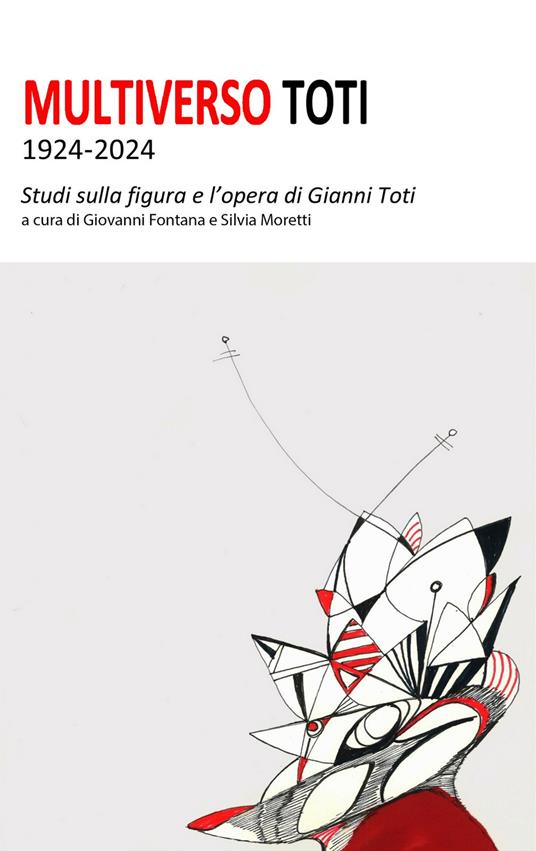
Mariátegui, José-Carlos. 2025. «Electro-Poet-Rivelazionaria: Il Salvataggio Delle Poesie Computazionali di Gianni Toti – Una conversazione con Francesco Mariotti.» In Multiverso Toti 1924-2024. Studi sulla figura e l’opera di Gianni Toti, edited by Giovanni Fontana and Silvia Moretti, 153-165. Roma: Gottifredo Edizioni.