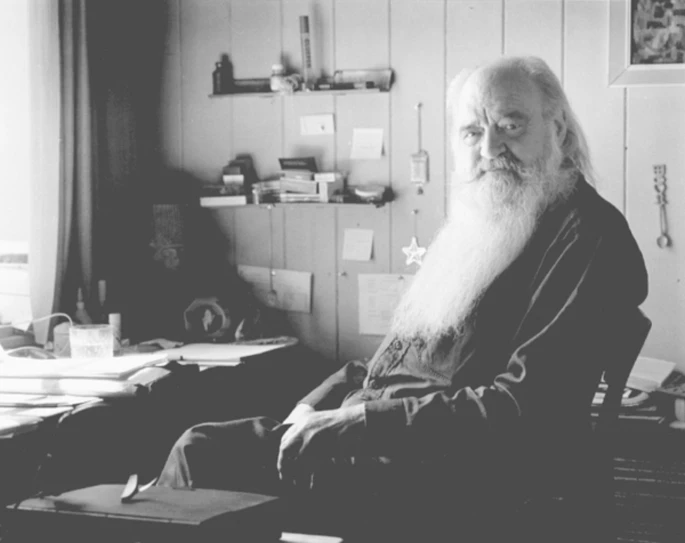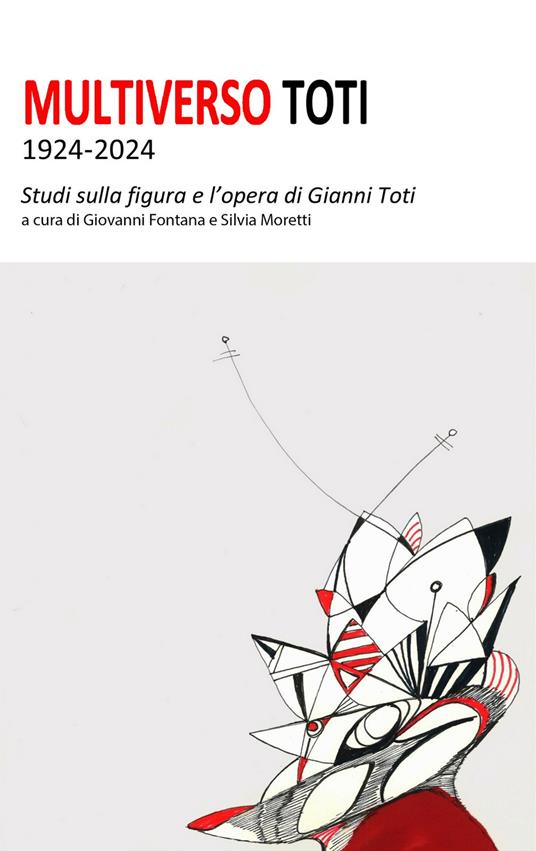
Electro-Poet-Rivelazionaria: Il Salvataggio delle Poesie Computazionali di Gianni Toti – Una conversazione con Francesco Mariotti

Beyond Project Cybersyn: Tracing the Influence of Stafford Beer Projects and Ideas in Latin America

This research paper explores Stafford Beer’s lesser-known journeys and collaborations in Latin America beyond the well-known Chilean project Cybersyn. It traces Beer’s involvement in the region back to the 1960s through his company SIGMA and its projects in Chile, as well as its attempts to expand into other Latin American countries. The paper also sheds light on a relatively unknown project in the 1970s in Peru, the Centre for the Study of People’s Participation (CENTRO), which was influenced by Beer’s ideas on real-time enterprise information and control systems. Furthermore, it explores Beer’s involvement in various projects across Latin America during the 1980s and 1990s, as the region gradually returned to democracy, including cases in Mexico, Uruguay (URUCIB), Venezuela (Cybervenez), and Colombia. While some implementations, particularly in Uruguay and Colombia, demonstrated the Viable System Model’s (VSM) potential for fostering genuine organizational democracy and social transformation, others in Mexico and Venezuela failed due to political instability or systemic corruption. The paper argues that though Beer’s VSM is often characterized as purely technocratic, its implementation in Latin America reveals that while sometimes appropriated by neoliberal reforms, it also aligned with regional aspirations for social transformation and creative liberation through the use of technology, challenging persistent biases about where technological innovation can originate.

This paper is part of an ongoing research on the history of cybernetics, which is mostly based on archival research and oral histories. I am particularly grateful to Carlos de Senna Figueiredo and Angela Espinosa, who have contributed with invaluable information ever since I started this research. I am also grateful to the Stafford Beer Collection at Liverpool John Moores University (Emily Parsons) and the team at Darcy and Berta Ribeiro Archive at the University of Brasilia (José Ronaldo Cunha, Katiane Brito and Janaina Dos Santos Melo), as well as to the ILO Archives in Geneva (Jacques Rodriguez). For this research, I interviewed a number of people to whom I am grateful: Víctor Ganón, Joan Garcés, Allenna Leonard, and Francisco Sagasti.

Read the full piece (open access)


Mariátegui, José-Carlos. 2025. «Beyond Project Cybersyn: Tracing the Influence of Stafford Beer Projects and Ideas in Latin America.» Systemic Practice and Action Research 38 (2): 9. https://doi.org/10.1007/s11213-025-09717-2. https://doi.org/10.1007/s11213-025-09717-2.

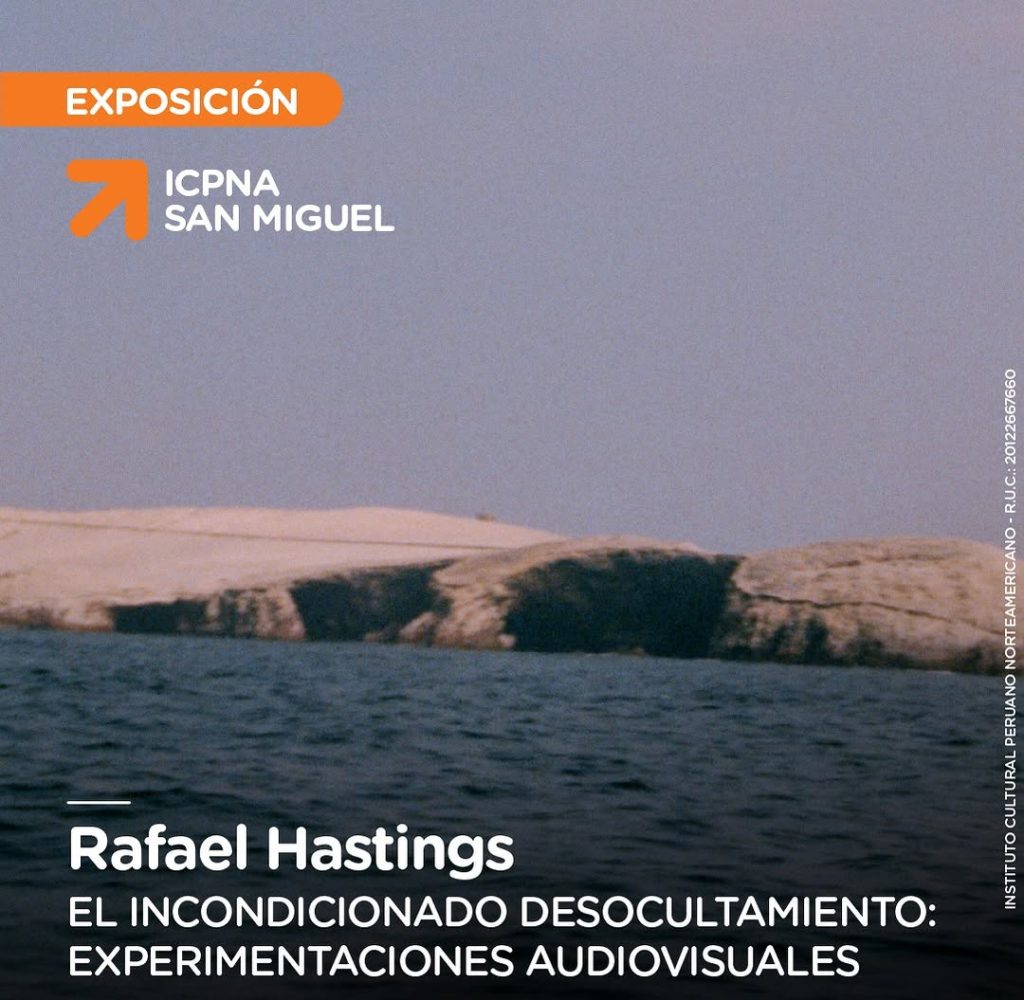
El Incondicionado Desocultamiento: Experimentaciones Audiovisuales de Rafael Hastings

Rafael Hastings (1942–2020) was one of the most unclassifiable figures in Latin American experimental film and video art. Born in Lima, he studied in Brussels into the orbit of Jean-Luc Godard, Maurice Béjart, and the experimental ferment of 1960s Europe — absorbing cinema, choreography, conceptual art, and countercultural politics before returning to Peru in the early 1970s with an ambition that defied any single medium.

This exhibition revisits a dimension of his practice that has remained almost entirely invisible until now: his work in film and video. At its centre is El incondicionado desocultamiento (1974), a 35mm experimental film believed lost for nearly five decades and recently recovered from the Filmoteca Española in Madrid. Shot across weeks of travel along the Peruvian coast — through the desert of Paracas and the ancient ceremonial complex of Sechín — the film weaves together pre-Columbian archaeology, Oriental mysticism, and speculative fiction into four short films that meditate on disappearance, transcendence, and the deep time of culture. Censored on its first release, screened only to a small circle of friends, and then quietly presumed gone, it is one of the most significant works of Latin American experimental cinema never to have entered the historical record.

Alongside the restored film, there is a projection of Hastings’ handwritten Diario de filmación — a production notebook dense with watercolours, technical calculations, collaged magazine clippings, and poetic instructions to himself — as well as16mm projection of raw footage of the film, making the materiality of celluloid itself part of the experience. Two recently recovered works, We Are Not a Family (1973) and Ceremony (1978), enable to trace the full arc of a decade in which Hastings produced thirteen audiovisual works and established himself as one of the most prolific and visionary experimental filmmakers in Latin America.

El incondicionado desocultamiento: Experimentaciones audiovisuales de Rafael Hastings was on view at the Espacio ICPNA San Miguel from 13 March to 26 April 2025.